Signed in as:
filler@godaddy.com

Our Blackness: our history, our being, our dignity, our soul is not for sale. Cash could never repair the Black experience in America.
- Shamia F.
It is impossible to fully comprehend and quantify the cumulative exploitation, disenfranchisement, pain and suffering endured by African Americans in the United States. Nevertheless, a comprehensive reparations program is needed to redress the crimes against African Americans inflicted or condoned by the United States Government. A leading question regarding a reparations program is how much it will cost and what methods will be used to pay its beneficiaries. This is one estimate for the cost of programs to redress these crimes and the high level proposal for the mechanics of how reparations could work.
Descendants of people enslaved in the United States of America who identify as Black/African American.
The cumulative effects of slave labor during chattel slavery, terrorism, disenfranchisement, and mass incarceration.
This program redresses these crimes in 4 ways.
The Black population of the United States is estimated at around 44 million people. It is estimated that 13.7% of this population is foreign born. An even larger number of Black Americans descend from African and Caribbean immigrants and have no ancestors who were enslaved. However, for the purposes of this estimate, 13.7% was used to bring the population of those benefiting from reparations to 38 million. This 38 million will be referred to as Descendants. Since this program is redressing the cumulative effects of these crimes, recent immigrants are not included (unless otherwise noted). There are organizations pursuing reparations for the descendants of slavery in the Caribbean. Americans who identify as two or more races were not included in this population estimate. It could be determined that multiracial Americans with “sufficient” enslaved ancestry receive partial reparations benefits.

A financial summary of this reparations program is shown in Table 1. The government expense is shown in the Amount column in trillions of dollars. The per person figure is an estimate of the total value that could be received by individuals. Category 1 is a financial asset that will be for every Descendant. It is important to note that the funds for categories 2 and 3 are based on choices or conditions at an individual level and may not be for every Descendant. For example, category 2 includes government funds for college/trade school, real estate purchases and small business loans. Descendants who elect these services get this value in the form of government payments directly to the parties involved (i.e. college).
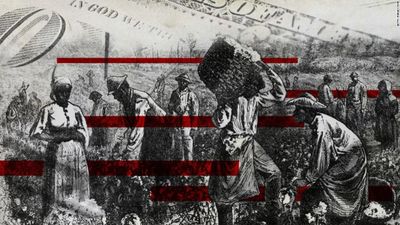
Thomas Craemer quantified the payment African Americans would have earned at the market wage rate of labor for 24 hours/day for life from 1776 - 1865. According to Darity/Mullen, A 5% interest rate brings the estimate to $17 trillion in 2019 dollars. This approach is deemed acceptable for the purposes of this estimate but has two deficiencies. First, the market wage rate would have been much higher if the millions of African Americans had been included in the labor market. Second, the model is a calculation of base wages only and does not include the compounding wealth that could not be achieved overtime. Third, this model is financial only and does not account for the multi-generational impact of physical, emotional and psychological trauma endured by enslaved African Americans.
The substantial size of this payment could present challenges both on a micro-distribution level and on its impact on the macro economy. This fund could be set up to encourage recipients to hold the value in a structured asset with dividend payments. Assuming a 3% dividend, a fund of this size would yield around $13,000 annually. Additionally, if the fund grows at 7% annually, Descendants could receive annual cash payments from that growth which would be an additional $45,000 annually bringing the total annual income from the fund to $58,000. This figure is equal to or exceeds the median income of a single earner home in 30 states and would sustain a modest lifestyle. Descendants could elect to rest, pursue hobbies and passion projects, or get more involved in their local community. The ability for the Descendants to rest is a powerful and much deserved notion for those whose ancestors were afforded none.
"Rest is a radical notion to the Black body." - Resmaa Menakum

Two of the leading discrepancies in this country are the wealth and education gaps between Black and white Americans. This section aims to redress these in five ways.
There is no way to begin to quantify the pain and suffering endured by the African American community over the last 400 years in the United States. No programs here will come close to truly remedying this experience. However this estimate looked at four areas to address.


A critical component to making reparations successful is a robust investment in supporting agencies and organizations. The National African American Reparations Commission (NAARC) has a 10 point reparations program that includes several organizations to support a reparations program. This estimate includes an annual cost of $20 billion for these organizations. A summary of the organizations is below. These organizations will be led by a National Reparations Bureau (as described by Darity and Mullen) which will be an umbrella organization to support the network or agencies described below.
The reparations program will include funding for an African Knowledge Program. This program will reconnect African Americans with African culture. According to the National Coalition of Blacks for Reparations in America (N’COBRA), the first of five injuries suffered by African Americans is the violent repression of personhood and nationhood. The cultural re-connection can be aided by expanded use (and government subsidies) of the African Ancestry DNA tests which shows specific tribal affiliations. This will empower African Americans with direction to learn the culture specific to their ancestry. Cultural education programs can include food, fashion, religion, language, music, art, customs, coming of age rituals and more.
The reparations program will establish a National Reparations Trust Authority. This authority will run sovereign land for African Americans. “These lands are to be utilized for major educational, commercial, industrial, economic/business and health/wellness institutions and enterprises to benefit people of African descent.” It will also support the restoration and enhancement of African American agricultural development.
Another organization would be the Black Business Development Bank. This bank will provide grants and loans to socially responsible for-profit entrepreneurship and economic ventures that are dedicated to building the Black community.
The Black Health and Wellness Agency will establish Emancipation Healing Centers. These centers will help the African American community “address and overcome the damages of Post Traumatic Slavery Syndrome and racism”. It will establish regional systems of Black controlled Health and Wellness Centers, “fully equipped with highly qualified personnel and the best 21st century facilities to offer culturally appropriate, holistic preventive, mental health and curative treatment services”. It will also set standards for culturally accountable health care services nationwide. Specialized programs should be established for prenatal, childbirth and maternal care. This organization will serve as a watchdog to identify and eliminate food deserts, environmental hazards stemming from infrastructure, and to ensure adequate, safe, accessible recreational facilities and programs.
The National Board of Education of African Ancestry will develop educational culture and formats designed for African American students. It will set African American curriculum standards nationwide (covering history, art, etc.) for year-round implementation for all students. It will support the training and cultural awareness of non-African American educational professionals including teachers and staff. The board will advocate and support Black students in the pursuit of fields where there is racial under representation. The board will also advocate for the official recognition of Black languages.
The African American Housing and Finance Authority will consist of a residential planning agency. This agency will “plan and construct holistic and sustainable “villages” with affordable housing and comprehensive cultural, educational, health and wellness, employment and economic services”. The authority will also set standards for zoning changes and provide resources for African American communities targeted for gentrification. The Authority will also assist with strategic financial, commercial, industrial, agricultural and technology-oriented business/economic enterprises for the benefit of Black America as a whole.
The African American Public Broadcasting organization will produce and/or distribute African American media, culture, entertainment, news and history. The Smithsonian and National Parks organizations will include an organization for African American Sacred Sites which will erect memorials commemorating African American history, especially the sites of lynchings, riots and massacres.
Finally, the Criminal Justice Transformation Agency will lead abolitionist efforts, set revamped criminal justice standards and provide job, education and housing services for those emancipated. As part of this initiative, reparations will also include the elimination of the 13th Amendment exception clause which permits the enslavement of those convicted of crime. This agency will also establish standards to criminalize racist policy and actions including but not limited to violating the Voting Rights Act, the Equal Housing Act, and the Civil Rights Act